
Seattle makes it almost too easy to turn a normal day into a trail day. You can grab coffee in the city, drive east toward the Cascades, and be walking through forest, climbing toward an alpine lake, or looking down at a mountain valley before lunch.
This guide to the best hikes near Seattle includes a mix of beginner-friendly waterfall walks, classic I-90 conditioning hikes, fire lookout climbs, North Cascades adventures, and a few huge mountain days for experienced hikers. Some are close enough for a half-day. Others require an early start, strong legs, and careful planning.
Trail conditions in Washington change quickly. Snow, wildfire smoke, washed-out roads, construction, parking closures, and seasonal access can all affect your hike. Always check recent trip reports, official road updates, and the latest park or forest guidance before you go.
Affiliate disclosure: This article may contain affiliate links, including Stay22 hotel links. If you book through these links, Fit Living Lifestyle may earn a commission at no extra cost to you.
Planning a longer outdoorsy Washington trip? You may also like these guides to Washington glamping destinations, treehouse glamping in Washington, and the historic Old Robe Trail.
Quick Picks: Best Seattle-Area Hikes by Type
| Best for | Hike | Approx. drive from Seattle |
|---|---|---|
| First-time Seattle hikers | Rattlesnake Ledge | 40–50 minutes |
| Easy waterfall hike | Twin Falls | 35–45 minutes |
| Alpine lake close to the city | Snow Lake | 55–70 minutes |
| Big fitness challenge | Mailbox Peak | 40–55 minutes |
| Steep I-90 views | Bandera Mountain | 55–70 minutes |
| Fire lookout views | Mount Pilchuck | 1.5–2 hours |
| Mount Rainier scenery | Skyscraper Mountain | 2–2.5 hours |
| Fall larches | Heather-Maple Pass Loop | 3–4 hours |
| North Cascades adventure | Hidden Lake Lookout | 3–4 hours |
| Expert-level alpine day | The Enchantments | 2.5–3.5 hours to Leavenworth area |
Before You Hike Near Seattle
Washington hiking is beautiful, but it is not casual once you leave the city. Even popular trails can have slick roots, snow patches, exposed ledges, washed-out roads, and limited cell service. Pack like you may spend longer outside than planned.
- Check recent trip reports: The Washington Trails Association is one of the best places to check current trail conditions.
- Know your pass: Some trailheads require a Northwest Forest Pass, some require a Discover Pass, some require a national park entrance fee, and some require no pass.
- Start early: Popular trailheads fill fast, especially Rattlesnake Ledge, Snow Lake, Mount Pilchuck, Mailbox Peak, and Maple Pass during larch season.
- Pack the 10 essentials: Navigation, headlamp, extra layers, food, water, sun protection, first aid, fire starter, repair kit, and emergency shelter.
- Bring traction in shoulder season: Microspikes can be useful well into spring and again by fall on shaded or higher trails.
- Respect closures: Roads and trails close for snow, fire, flooding, wildlife, repairs, and restoration. Do not go around gates or barriers.
1. Rattlesnake Ledge
Best for: First-time Seattle hikers, short workouts, big views close to the city
Distance: 4 miles round trip
Elevation gain: 1,160 feet
Difficulty: Moderate
Pass: None for the main Rattlesnake Lake parking area
Official trail info: WTA Rattlesnake Ledge
Rattlesnake Ledge is one of the most popular hikes near Seattle because it delivers a huge view without a huge drive. The trail climbs steadily through forest to an exposed rocky ledge above Rattlesnake Lake, with views toward the Cedar River Watershed, Mount Si, Mount Washington, and the I-90 corridor.
This is a great first Seattle-area hike, but do not mistake popular for easy. The trail gains more than 1,000 feet, the ledge has steep drop-offs, and weekends can feel crowded from the parking lot to the viewpoint.
If you want a quieter moment, continue a short distance toward Middle and Upper Ledges. The views are still good, and the crowd usually thins once people have taken their main ledge photo.

Nearby camping and stays: Rattlesnake Lake is day-use, so stay in North Bend or Snoqualmie if you want to make a weekend of it. For camping, look at nearby national forest options like Denny Creek or Tinkham Campground along the I-90 corridor.
After-hike food: Head into North Bend for North Bend Bar & Grill, Twede’s Cafe, or a quick coffee stop before driving back to Seattle.
2. Twin Falls at Olallie State Park
Best for: Waterfalls, families, rainy-day hiking, beginner-friendly mileage
Distance: 2.4 miles round trip
Elevation gain: 500 feet
Difficulty: Easy to moderate
Pass: Discover Pass
Official trail info: WTA Twin Falls and Olallie State Park
Twin Falls is one of the best easy hikes near Seattle when you want forest, river sound, and a waterfall payoff. The trail follows the South Fork Snoqualmie River through mossy woods, then climbs toward viewpoints of the falls.
This hike is especially good in spring, fall, and winter, when the waterfall is flowing and the forest feels lush. It is short enough for families, but the stairs and elevation still make it feel like a real outing.
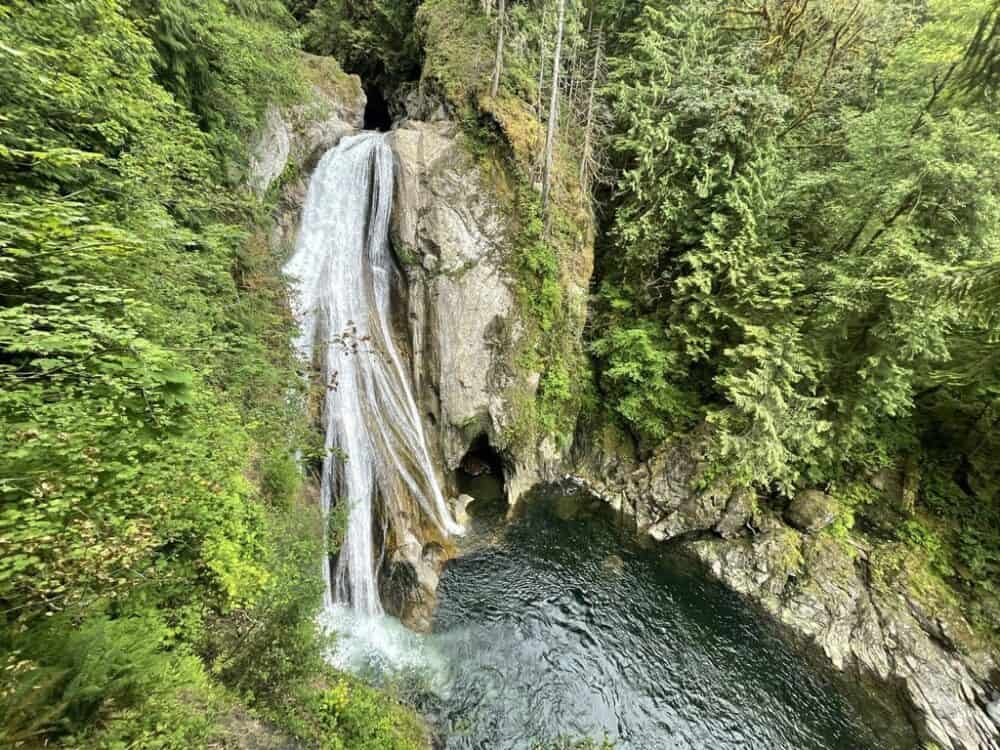
Nearby camping and stays: Olallie is a day-use state park, but camping is available along the Snoqualmie Pass corridor at Denny Creek and Tinkham Campground when open. For a hotel stay, North Bend and Snoqualmie are closest.
After-hike food: North Bend is the easiest stop. For a Twin Peaks-themed classic, try Twede’s Cafe. For burgers and post-hike comfort food, use North Bend Bar & Grill.
3. Snow Lake
Best for: Alpine lake views close to Seattle, strong beginners ready for a longer day, summer hiking
Distance: About 7–8 miles round trip, depending on turnaround
Elevation gain: About 1,800 feet
Difficulty: Moderate
Pass: Northwest Forest Pass or federal recreation pass
Official trail info: USFS Snow Lake Trail and WTA Snow Lake
Snow Lake is one of the most popular alpine lake hikes near Seattle. Starting from Alpental at Snoqualmie Pass, the trail climbs through forest and rocky slopes before dropping toward a bright blue lake tucked beneath granite ridges.
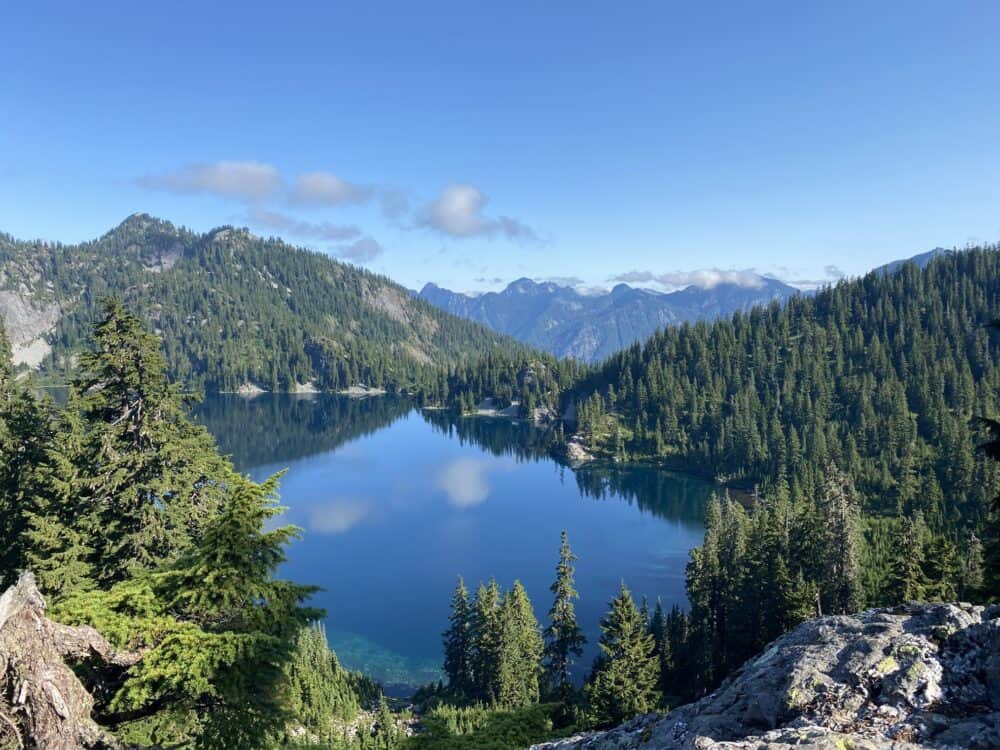
The distance and rocky sections make it more demanding than Rattlesnake or Twin Falls, but it is still very achievable for hikers with solid fitness and good shoes. Go early on warm weekends because the trailhead fills quickly.
Nearby camping and stays: Camp along the I-90 corridor at Denny Creek or Tinkham when open. For a non-camping option, stay near Snoqualmie Pass, North Bend, or Snoqualmie.
After-hike food: Stop at Dru Bru at Snoqualmie Pass or drive back to North Bend for a bigger meal.
4. Mailbox Peak
Best for: Serious training, steep climbs, testing your hiking fitness
Distance: 9.4 miles round trip on the newer trail
Elevation gain: 4,000 feet
Difficulty: Hard
Pass: Discover Pass
Official trail info: WTA Mailbox Peak
Mailbox Peak is a Seattle-area hiking rite of passage. The newer trail climbs steadily through forest with long switchbacks, then joins the old trail for the final push to the famous mailbox on the summit.
This hike is not beginner-friendly. Four thousand feet of gain is a serious workout, and the final section can feel especially brutal if you went too hard early. The reward is a big summit view into the Middle Fork Snoqualmie Valley, across nearby peaks, and toward Mount Rainier on clear days.

Nearby camping and stays: For camping, check Middle Fork Campground when open. For a hotel stay, North Bend, Snoqualmie, or Issaquah are the practical bases.
After-hike food: North Bend is your best bet. A burger, fries, and a cold drink will feel earned after this one.
5. Bandera Mountain
Best for: I-90 views, steep training, wildflowers, hikers ready for a tougher climb
Distance: About 7–8 miles round trip, depending on turnaround
Elevation gain: About 2,850–3,400 feet, depending on route
Difficulty: Hard
Pass: Northwest Forest Pass or federal recreation pass
Official trail info: WTA Bandera Mountain
Bandera Mountain starts gently enough, then changes personality. The Ira Spring Trail climbs through forest and open slopes before the route toward Bandera turns steep, rocky, and much more direct.
You do not have to push all the way to the true summit to get a great day. Many hikers turn around at the false summit, where views over the I-90 corridor, Mason Lake area, surrounding ridges, and Mount Rainier already feel more than worth the effort.

Nearby camping and stays: Denny Creek and Tinkham Campgrounds are useful bases for the Snoqualmie Pass/I-90 hiking corridor. North Bend, Snoqualmie, and Snoqualmie Pass also work for hotel stays.
After-hike food: Stop at Dru Bru or another Snoqualmie Pass option if you are already up high, or save dinner for North Bend on the way home.
6. Mount Pilchuck
Best for: Fire lookout views, North Cascades panoramas, shorter but steep hiking
Distance: 5.4 miles round trip
Elevation gain: 2,300 feet
Difficulty: Moderate to hard
Pass: Northwest Forest Pass or federal recreation pass
Official trail info: WTA Mount Pilchuck and Mount Pilchuck State Park
Mount Pilchuck is one of the most rewarding hikes near Seattle for the amount of mileage. The trail climbs through forest, rocky slopes, and boulder fields to a restored fire lookout perched on the summit.
On a clear day, the lookout gives 360-degree views toward Mount Baker, Glacier Peak, Mount Rainier, the Olympics, and the surrounding North Cascades. The hike is short on paper but steep and rocky enough to feel challenging.

Nearby camping and stays: Look at Verlot-area national forest campgrounds or stay in Granite Falls, Everett, or Lake Stevens. Road access to the trailhead can be rough and seasonal, so check before committing to a long drive.
After-hike food: Granite Falls has casual options for pizza, burgers, coffee, and quick post-hike meals. Check current hours before relying on a late dinner.
7. Skyscraper Mountain at Mount Rainier
Best for: Mount Rainier views, wildflower meadows, Sunrise-area hiking
Distance: 8 miles round trip
Elevation gain: About 1,300 feet
Difficulty: Moderate to hard
Pass: Mount Rainier National Park entrance fee or federal pass
Official trail info: WTA Skyscraper Mountain and Mount Rainier day hiking
Skyscraper Mountain is one of the best Sunrise-area hikes at Mount Rainier when visibility is good. The route moves through open meadows, ridgelines, and rocky viewpoints, with Mount Rainier feeling enormous across the landscape.
From the top, look toward Burroughs Mountain, the Inter Glacier, Steamboat Prow, Vernal Park, Winthrop Creek, Grand Park, Fremont Lookout, and Berkeley Park. It is the kind of hike that rewards a clear forecast and a slow lunch break.
For 2026, Mount Rainier National Park is not requiring timed-entry reservations, but entrance fees still apply and parking may fill. Sunrise Road is seasonal, often opening in summer and closing when snow returns, so check the official road status before driving out.

Nearby camping and stays: White River Campground is the closest national park campground for Sunrise-area hikes when open. Outside the park, stay near Enumclaw, Crystal Mountain, or Greenwater.
After-hike food: If you are heading back through Enumclaw, stop there for dinner. If you are staying near Crystal, check current resort dining hours before your hike.
8. Heather-Maple Pass Loop
Best for: Golden larches, ridgelines, North Cascades views, strong day hikers
Distance: About 7.2 miles loop
Elevation gain: About 2,000 feet
Difficulty: Moderate to hard
Pass: Northwest Forest Pass or federal recreation pass
Official trail info: WTA Heather-Maple Pass Loop
Heather-Maple Pass Loop is one of Washington’s great fall hikes. In summer, it delivers wildflowers, alpine lakes, and huge ridgeline views. In fall, the golden larches make it feel like the whole North Cascades turned the lights on.
The trail starts at Rainy Pass on Highway 20 and loops past views of Lake Ann, surrounding ridges, and jagged North Cascades peaks. Go clockwise or counterclockwise depending on how you prefer your climbing and descending, but expect a real workout either way.
This hike is a long drive from Seattle, so it is best as an overnight trip. Check Highway 20 road status before going, especially in fall when snow can arrive early.

Nearby camping and stays: Stay in Winthrop or Mazama on the east side, or Marblemount on the west side depending on your route. Campground options vary by season and road access, so check Recreation.gov and forest updates before you go.
After-hike food: On the east side, head to Winthrop or Mazama for food. On the west side, Marblemount has casual post-hike options, but hours can be limited, especially outside summer.
9. Hidden Lake Lookout
Best for: North Cascades drama, fire lookout views, experienced hikers
Distance: About 8–9 miles round trip, depending on route
Elevation gain: About 3,300 feet
Difficulty: Hard
Pass: Check current trailhead guidance; no pass is often listed, but road and park rules matter
Official trail info: NPS Hidden Lake Trail and WTA Hidden Lake Lookout
Hidden Lake Lookout is one of the most spectacular hikes in the North Cascades. The trail starts in forest, climbs through meadows, and eventually reaches rocky alpine terrain with sweeping views toward some of the most rugged peaks in Washington.
This hike is not close to Seattle in a casual sense. It is a long drive, the access road can be rough, and the route can hold snow or require careful navigation. But for hikers with the right skills and conditions, the lookout view is unforgettable.

Nearby camping and stays: Marblemount is the most practical base for a Hidden Lake trip. For camping, check North Cascades National Park and Mt. Baker-Snoqualmie National Forest options, including Goodell Creek, Newhalem Creek, and nearby forest campgrounds when open.
After-hike food: Marblemount has limited but useful food options, including places like Mondo and seasonal roadside stops. Check hours before you hike, and bring backup food in the car.
10. The Enchantments
Best for: Expert hikers, alpine lakes, granite basins, golden larches, once-in-a-season goals
Distance: About 18–20+ miles for the full thru-hike, depending on route and side trips
Elevation gain: About 4,500+ feet, with major descent depending on direction
Difficulty: Very hard
Pass/permit: Day-use permit is required and self-issued; overnight permits are limited and handled by lottery/reservation
Official permit info: USFS Enchantments and Recreation.gov Enchantment Permit Area
The Enchantments are not just another hike near Seattle. This is a serious alpine route through granite, lakes, larches, talus, steep passes, and fragile wilderness. It is also one of the most beautiful hiking experiences in Washington.
Most hikers experience the Enchantments in one of three ways: an overnight backpacking trip with a hard-to-get permit, a very long single-day thru-hike, or a shorter out-and-back to one of the lower lakes. None are easy.
If you attempt the full thru-hike, plan transportation between trailheads, start well before sunrise, carry navigation, water treatment, layers, food, headlamp, emergency gear, and know your turnaround options. Aasgard Pass is steep, loose, and demanding. Snow and ice can make this route much more serious.

Nearby camping and stays: Leavenworth is the best base for hotels and restaurants. For camping, look at Icicle Creek-area options like Eightmile, Johnny Creek, Bridge Creek, and other Okanogan-Wenatchee National Forest campgrounds when open.
After-hike food: Leavenworth is full of post-hike options. Try München Haus for a casual beer garden meal, or choose a sit-down restaurant if your legs need a longer break.
Best Camping Near Seattle Hikes
If you want to turn these hikes into a weekend, choose your campsite based on the trail corridor. Campgrounds in Washington can book early, operate seasonally, or close because of weather and road damage, so always confirm current dates and rules before leaving.
| Area | Best for these hikes | Camping options to check |
|---|---|---|
| I-90 / Snoqualmie Pass | Rattlesnake, Twin Falls, Snow Lake, Mailbox, Bandera | Denny Creek, Tinkham, Middle Fork |
| Mountain Loop Highway | Mount Pilchuck | Verlot-area and Mt. Baker-Snoqualmie National Forest campgrounds |
| Mount Rainier / Sunrise | Skyscraper Mountain | White River, Cougar Rock, Ohanapecosh |
| North Cascades / Highway 20 | Heather-Maple Pass, Hidden Lake | North Cascades campgrounds, nearby forest campgrounds |
| Leavenworth / Icicle Creek | The Enchantments | Eightmile, Johnny Creek, Icicle Creek-area campgrounds |
Where to Stay for a Seattle Hiking Trip
If you are visiting Seattle specifically to hike, you do not have to stay downtown the whole time. Spend a night near the trail corridor and you can avoid the early-morning city drive.
Stay in North Bend or Snoqualmie for Rattlesnake Ledge, Twin Falls, Mailbox Peak, Bandera Mountain, and Snow Lake.
Stay in Everett, Lake Stevens, or Granite Falls for Mount Pilchuck and Mountain Loop Highway hikes.
Stay in Enumclaw, Crystal Mountain, or Greenwater for Sunrise-area hikes at Mount Rainier.
Stay in Marblemount, Mount Vernon, Winthrop, or Mazama for North Cascades hikes, depending on road access and which side of the mountains you are approaching from.
Stay in Leavenworth for the Enchantments, Icicle Creek hikes, and a hiking trip with good food after the trail.
What to Pack for Hiking Near Seattle
- Rain shell: Weather changes fast, even when Seattle looks dry.
- Insulating layer: Summits, lakes, and passes can be much colder than the trailhead.
- Headlamp: Essential for long days, fall hikes, and unexpected delays.
- Water and filter: Carry enough water and bring treatment for longer alpine hikes.
- Snacks and real food: Steep hikes like Mailbox, Bandera, Hidden Lake, and the Enchantments need more fuel than a granola bar.
- Map and offline navigation: Do not rely on cell service in the mountains.
- Trekking poles: Helpful on steep descents like Bandera, Mailbox, Aasgard Pass, and Hidden Lake.
- Microspikes or traction: Useful in spring, fall, and winter when shaded trails hold ice.
Best Seasons for Hiking Near Seattle
Spring: Lower-elevation hikes like Twin Falls, Rattlesnake Ledge, and some I-90 trails are good early-season choices. Higher routes may still be snow-covered.
Summer: Best for alpine lakes, fire lookouts, Mount Rainier, and North Cascades hikes. Start early to beat heat, crowds, and afternoon storms.
Fall: One of the best hiking seasons in Washington. Look for larches on Maple Pass and Enchantments-area hikes, but watch for early snow and shorter daylight.
Winter: Stick to lower-elevation hikes unless you have snow travel experience. Twin Falls, Rattlesnake Ledge, and some foothill trails can be good with proper traction and current conditions.
Final Thoughts on the Best Hikes Near Seattle
The best thing about hiking near Seattle is the range. You can start with Rattlesnake Ledge or Twin Falls, build fitness on Mailbox Peak and Bandera Mountain, then work toward bigger goals like Mount Pilchuck, Hidden Lake Lookout, Maple Pass, or the Enchantments.
Choose the trail that fits your fitness level, the season, and the conditions that day. Pack well, check recent reports, respect permits and closures, and give yourself more time than you think you need.
The mountains around Seattle are close, but they are still mountains. That is exactly what makes them worth the effort.
More Hiking and Adventure Guides
- Adventure and Hiking in Ireland
- Hiking the Banaue Rice Terraces
- The Historic Old Robe Trail in Washington
- Hiking Havasu Falls
- Hiking the High Sierra Trail
- Climbing Kilimanjaro
- Hiking in Thailand
- Some of the Best Hikes in the World

World Traveling Blogger, Social Media Expert and Nerd who has a passion for Adventure and Fitness.