
Yellowstone is one of those parks where “easy hike” can still mean geysers, waterfalls, bison, hot springs, lake views, and a solid chance of saying, “Wait, is this place even real?”
The good news is that you do not need to be a hardcore hiker to enjoy Yellowstone. A lot of the best scenery sits along boardwalks, short trails, paved paths, and gentle loops. That makes the park great for families, casual hikers, first-time visitors, and anyone who wants the views without pretending they enjoy suffering.
That said, Yellowstone is still wild. The weather changes fast. Wildlife has no interest in your selfie plans. Thermal areas are dangerous if you leave the trail. Before heading out, check the official Yellowstone current conditions page, download maps from the NPS Yellowstone maps page, and review the park’s hiking information.
Here are some of the best easy hikes in Yellowstone National Park.
1. Grand Prismatic Spring Overlook Trail
Distance: About 1.6 miles round trip
Area: Midway Geyser Basin
Best for: The classic Grand Prismatic view
Trail type: Out and back
Difficulty: Easy to moderate
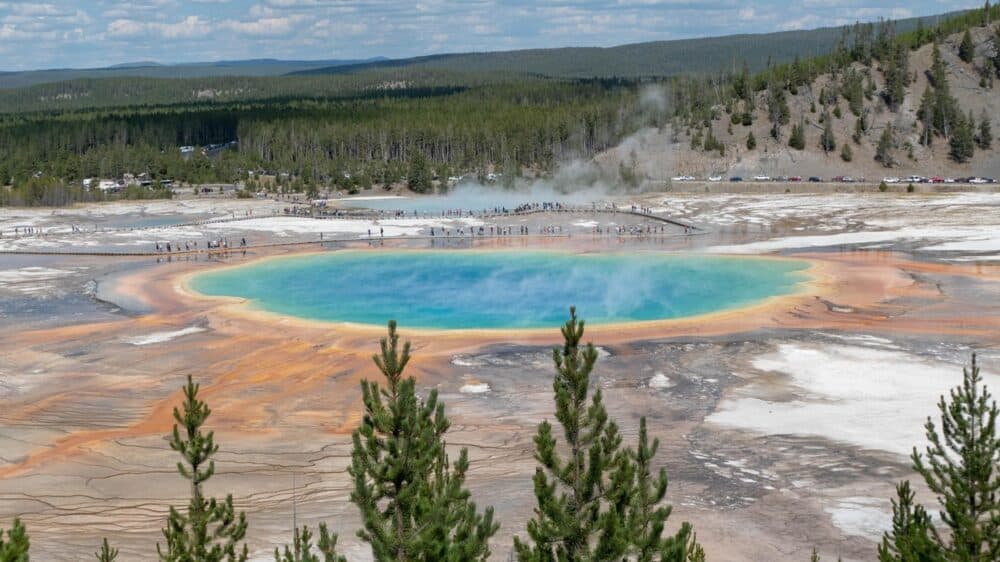
If you only do one easy hike in Yellowstone, make it this one.
Grand Prismatic Spring is amazing from the boardwalk, but the overlook gives you the view everyone wants. From above, the colors spread out like a giant natural target. Blue in the middle. Orange and yellow around the edges. Steam drifting across it just enough to make photography annoying, because Yellowstone likes to keep you humble.
The trail starts at the Fairy Falls Trailhead. It follows a wide path before climbing to the overlook. The climb is short, but you will feel it a little. Most people with basic fitness can do it without much trouble.
Go in the middle of the day if you want the best color. Early mornings can be steamy and the spring may be harder to see. That said, mornings usually mean fewer people. Pick your battle.
You can also continue to Fairy Falls if you want a longer hike, but the overlook alone is a great short option.
2. Upper Geyser Basin and Old Faithful Boardwalks
Distance: Flexible, from under 1 mile to several miles
Area: Old Faithful
Best for: Geysers, boardwalks, and classic Yellowstone
Trail type: Boardwalk loops
Difficulty: Easy
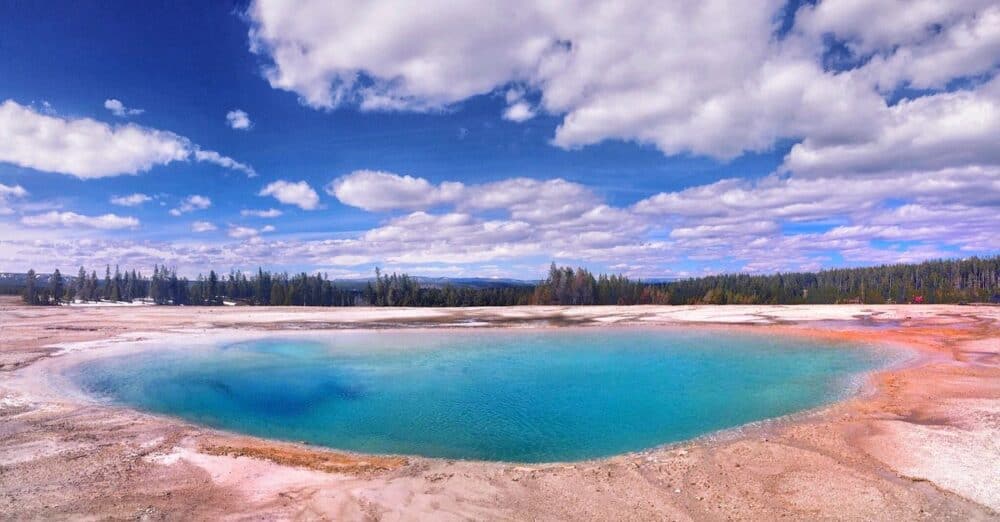
This is one of the best easy walking areas in the whole park.
Most visitors stop at Old Faithful, watch the eruption, take a few photos, and leave. That is a mistake. The boardwalks around Upper Geyser Basin are packed with thermal features, smaller geysers, colorful pools, and weird little bubbling things that make Yellowstone feel alive.
You can make this walk as short or long as you want. Stay near Old Faithful for an easy stroll, or keep following the boardwalks deeper into the basin. There are signs along the way, and the paths are easy to follow.
Before you go, check the official Yellowstone geyser activity page. Old Faithful is not the only geyser worth seeing. Some of the other predicted geysers can be just as fun, especially because the crowds are usually smaller.
This area is also great if you are traveling with people who do not want a “real hike.” You still get a big Yellowstone experience without needing boots, trekking poles, or a dramatic trailhead photo.
3. West Thumb Geyser Basin Trail
Distance: About 0.6 miles
Area: Yellowstone Lake
Best for: Hot springs beside the lake
Trail type: Boardwalk loop
Difficulty: Easy
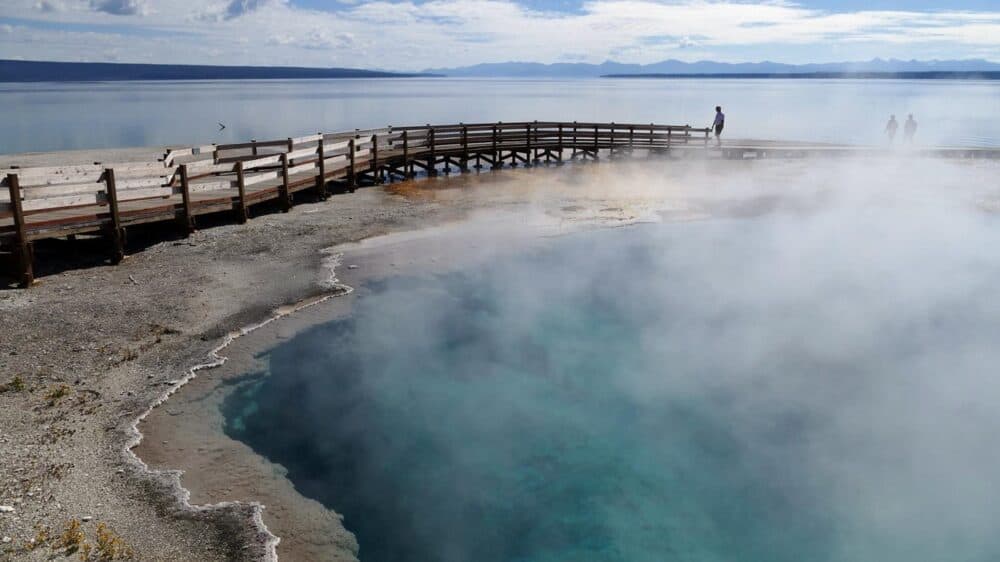
West Thumb is one of my favorite easy stops in Yellowstone because it feels different from the other geyser basins.
The boardwalk loops through hot springs and thermal pools right beside Yellowstone Lake. You get the steam, the bright blue water, and the huge lake views all in one stop. It is short, scenic, and easy to fit into a busy park day.
This is a great option if you are driving between Old Faithful and Lake Yellowstone. It does not take long, but it feels like more than a quick roadside stop.
The trail is mostly flat, and the boardwalk makes it very approachable. Just stay on the path. The ground in thermal areas can be thin and dangerous. Yellowstone is not the place to test your shortcut skills.
4. Storm Point Trail
Distance: About 2.3 miles round trip
Area: Yellowstone Lake
Best for: Lake views, meadows, and a quieter walk
Trail type: Loop
Difficulty: Easy
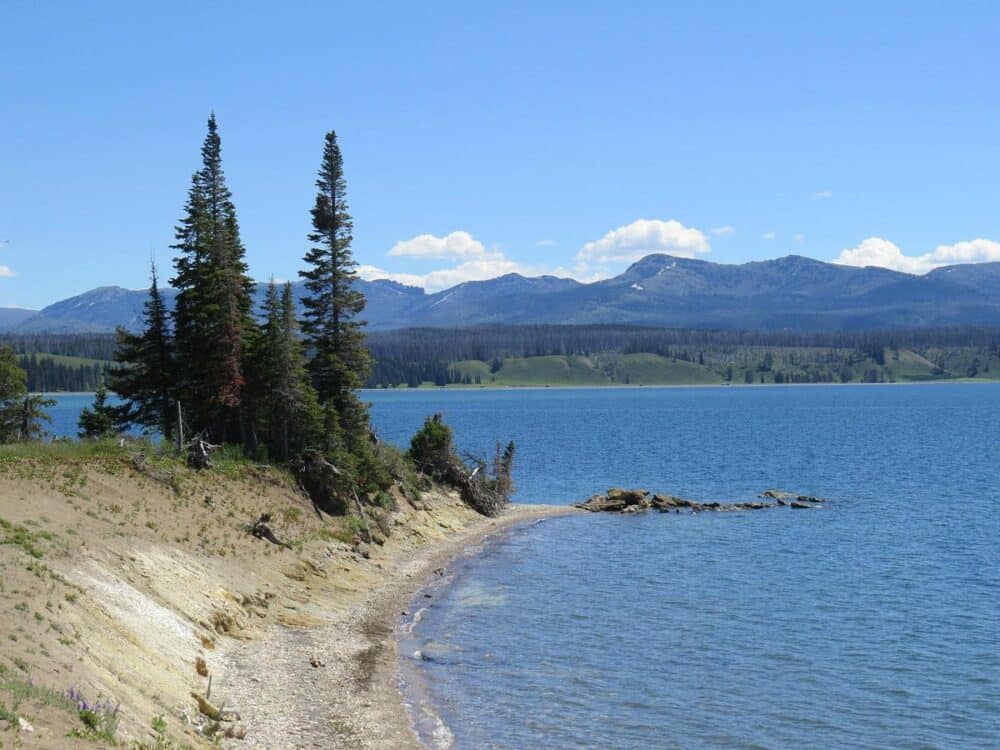
Storm Point is a great choice when you want an actual trail, not just a boardwalk.
The hike starts near Indian Pond and loops through open meadow, forest, and shoreline along Yellowstone Lake. It is mostly flat, and the lake views are beautiful. On a calm day, this hike feels peaceful in a way that some of the busier geyser areas do not.
This is also a place where you may see wildlife. Bison are common in the wider area, and marmots are often seen near the rocky shoreline. Bring bear spray and know how to use it. This is still Yellowstone, even if the trail feels mellow.
Storm Point can close at times due to bear activity, so check current conditions before making it a firm plan.
5. Wraith Falls Trail
Distance: About 1 mile round trip
Area: Mammoth to Tower-Roosevelt
Best for: A short waterfall hike
Trail type: Out and back
Difficulty: Easy
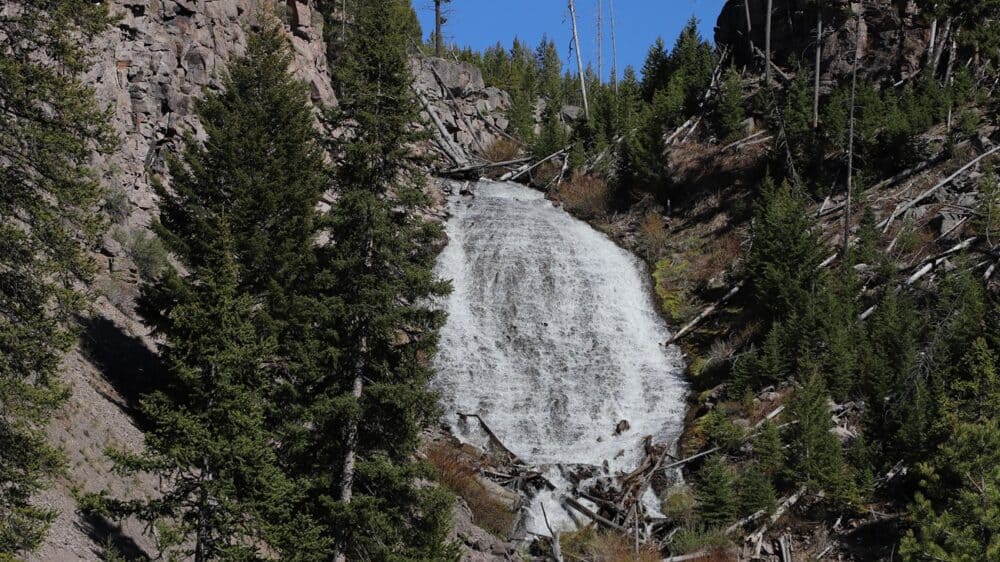
Wraith Falls is a simple and rewarding hike. That is exactly why it belongs on this list.
The trail crosses open sagebrush and leads to a view of Wraith Falls spilling down a rocky slope. It is not the biggest waterfall in Yellowstone, but it is pretty, peaceful, and easy to reach.
This is a nice leg-stretcher if you are driving between Mammoth Hot Springs and Tower-Roosevelt. It also tends to feel less chaotic than the major boardwalk areas.
There is not much shade, so bring water and a hat if you are hiking in summer. Also keep an eye out for wildlife. This part of the park can be active.
6. Trout Lake Trail
Distance: About 1.2 miles round trip
Area: Lamar Valley
Best for: A small lake near great wildlife country
Trail type: Loop
Difficulty: Easy to moderate
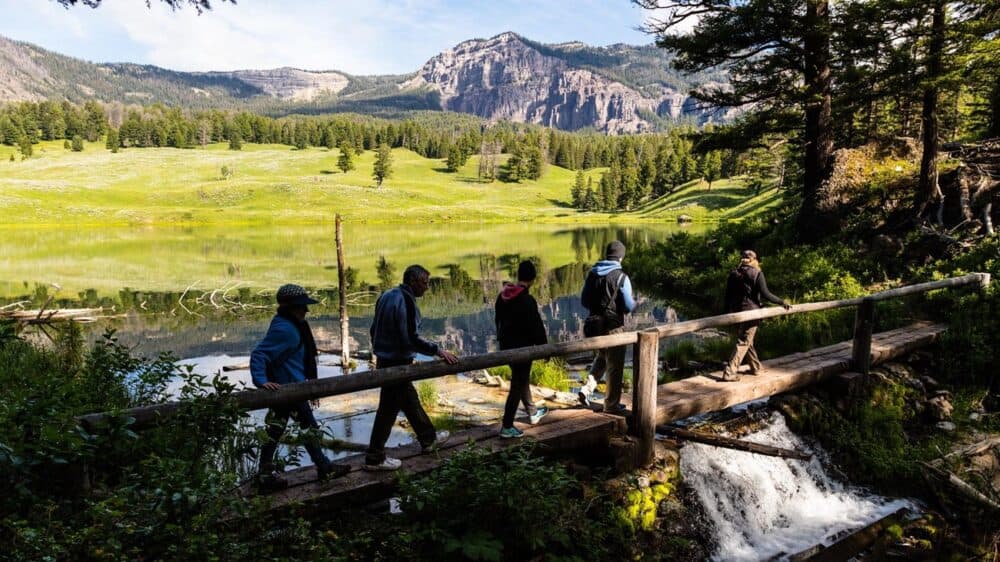
Trout Lake is short, but it starts with a climb. Nothing wild, but enough to remind your legs that you are not just wandering through a parking lot.
Once you reach the lake, the trail loops around the water. The setting is lovely, especially if you visit early or late in the day. It is also close to Lamar Valley, one of the best wildlife areas in Yellowstone.
This hike is a great add-on if you are already heading into Lamar Valley for wolves, bison, pronghorn, or sunrise wildlife watching. The lake itself feels tucked away compared to the main roadside stops.
Bring bear spray here. This is prime wildlife country. Also give yourself extra driving time in Lamar Valley. Bison traffic jams are real, and the bison do not care about your itinerary. Honestly, respect.
7. Mammoth Hot Springs Terraces
Distance: Flexible, from short walks to about 1.5 miles
Area: Mammoth Hot Springs
Best for: Terraces, boardwalks, and strange landscapes
Trail type: Boardwalks and paved paths
Difficulty: Easy
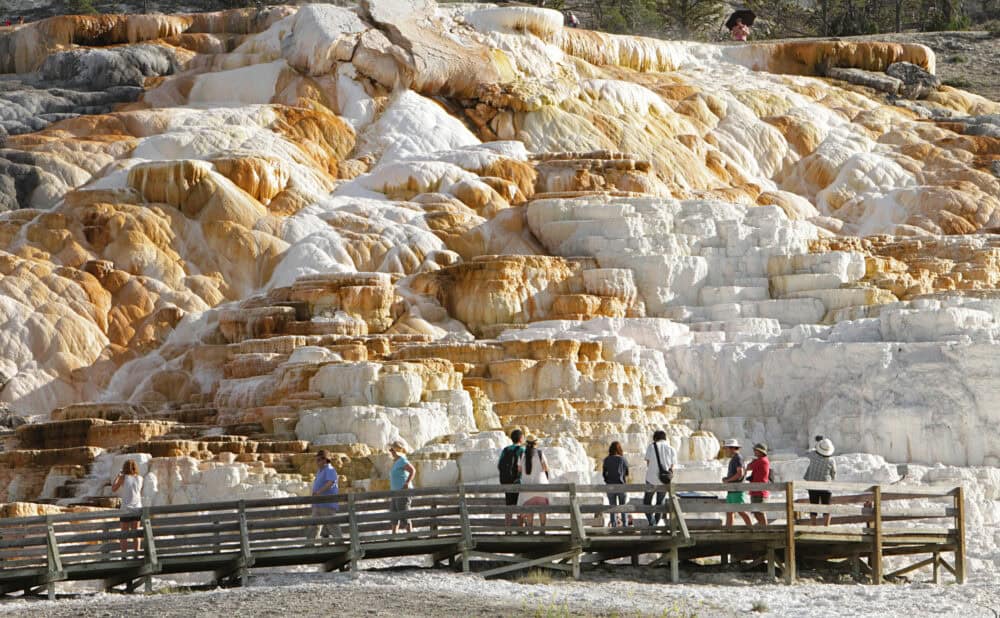
June 2015;
Catalog #20197d;
Original #IMG_7079
Mammoth Hot Springs looks nothing like the geyser basins near Old Faithful.
Instead of deep blue pools and geysers, you get white, orange, and cream-colored terraces formed by hot water flowing over limestone. Some areas look like frozen waterfalls. Other sections look like something from another planet.
You can explore the Lower Terraces on foot using boardwalks and paved paths. You can also drive the Upper Terrace Loop when it is open. The walking can be as short or long as you want, which makes Mammoth a good choice for mixed groups.
This area is also close to the North Entrance and Gardiner, Montana. It is a good first or last stop if you are entering or leaving that side of the park.
8. Norris Geyser Basin Boardwalks
Distance: Flexible, about 0.5 to 2 miles
Area: Norris
Best for: Steam, geysers, and raw thermal scenery
Trail type: Boardwalk loops
Difficulty: Easy
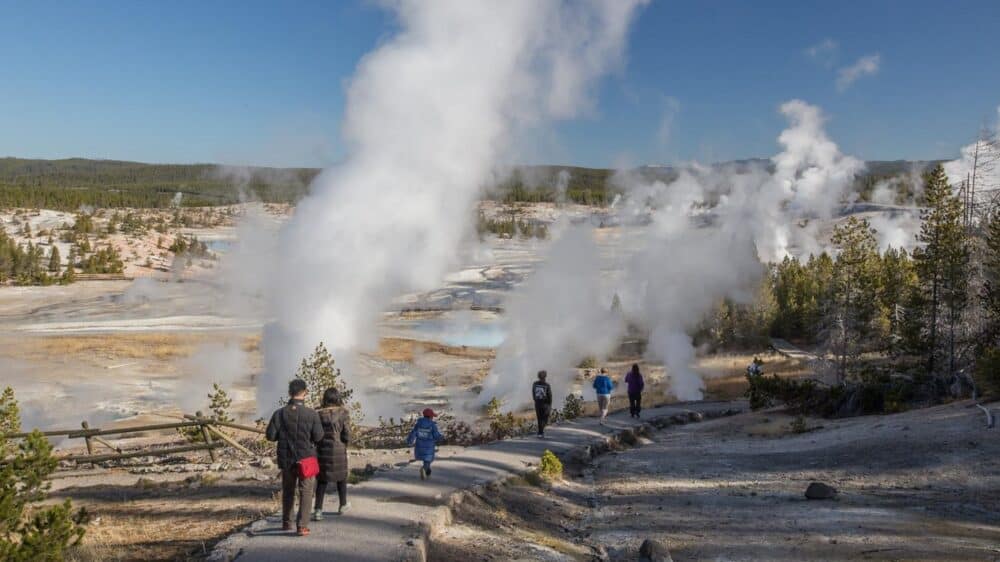
Norris Geyser Basin feels wilder and moodier than some of the other thermal areas.
The boardwalks take you through two main sections, Porcelain Basin and Back Basin. Porcelain Basin is more open and dramatic, with steam rising across a pale landscape. Back Basin is longer and takes you through more trees and thermal features.
You can do a short walk or spend more time exploring both areas. Either way, Norris is worth it.
This is one of those places where the sounds are part of the experience. Hissing steam. Bubbling water. The occasional deep gurgle from somewhere below the surface. Nothing says “relaxing vacation” like the Earth sounding mildly annoyed.
Stay on the boardwalks here. Always. The thermal ground is dangerous, and the safe-looking spots are not always safe.
9. Fountain Paint Pot Trail
Distance: About 0.5 miles
Area: Lower Geyser Basin
Best for: Mud pots and quick thermal variety
Trail type: Boardwalk loop
Difficulty: Easy
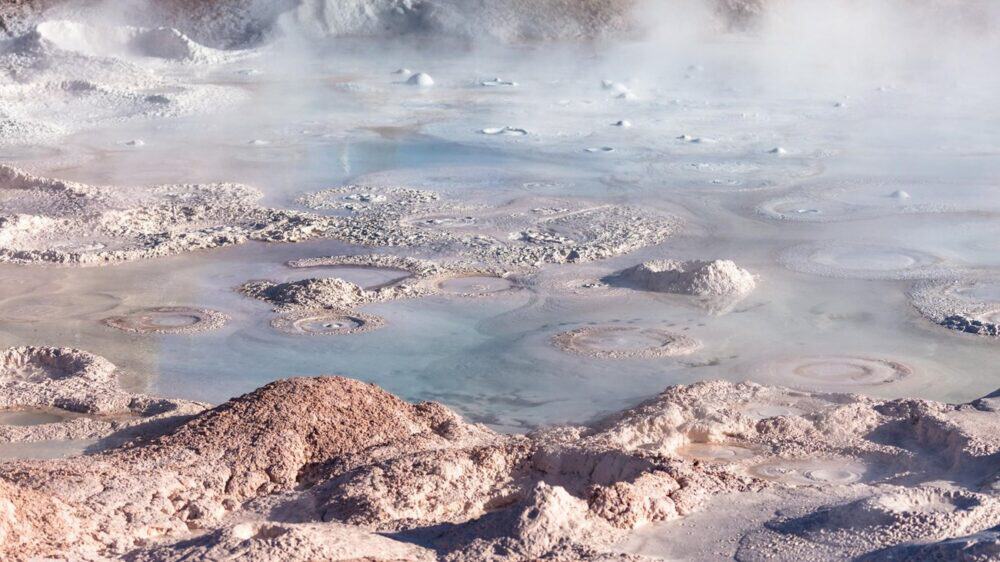
Fountain Paint Pot is short, easy, and packed with variety.
You will see bubbling mud pots, hot springs, fumaroles, and small geysers in one quick loop. It is a great stop if you want a thermal area that does not take much time.
The mud pots are the highlight here. They pop, blurp, and splatter like Yellowstone is cooking something deeply questionable. Kids usually love this area, and adults usually pretend they are too mature to find it funny.
This is an easy add-on while exploring the west side of the park between Madison, Old Faithful, and the Grand Prismatic area.
10. Mud Volcano Trail
Distance: About 0.6 miles
Area: Near Hayden Valley
Best for: Mud pots, steam, and bison nearby
Trail type: Boardwalk loop
Difficulty: Easy, with some uphill sections
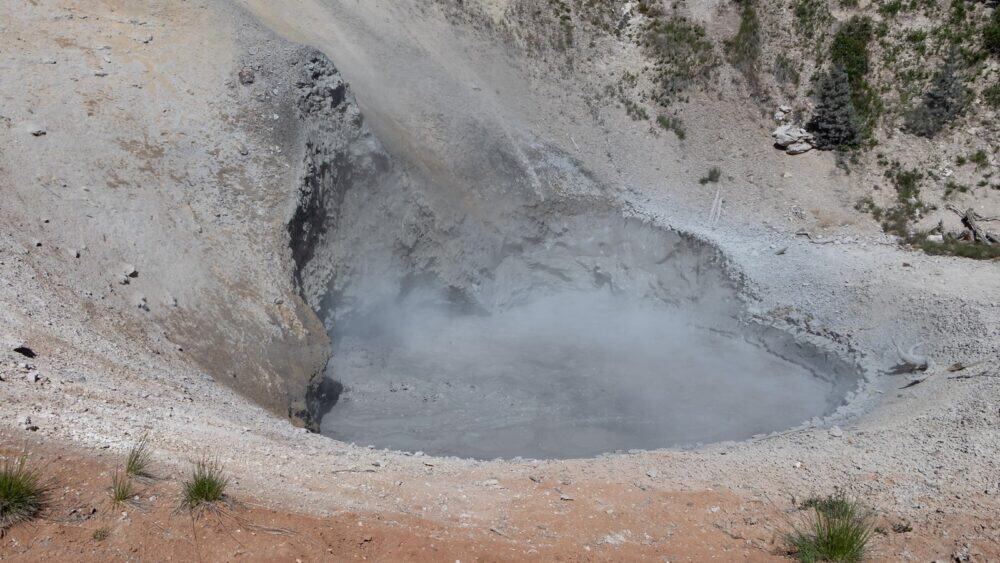
Mud Volcano is weird in the best way.
This short boardwalk loop takes you past steaming vents, bubbling mud, and the famous Dragon’s Mouth Spring. That one sounds like something breathing from inside a cave, which is both cool and slightly unsettling.
There is a bit of uphill walking, but it is still short and manageable for most visitors. Take your time if needed.
Mud Volcano is close to Hayden Valley, so this is a great stop before or after wildlife watching. Bison are often in the area. Give them lots of space, even if they look calm. A bison can go from statue to freight train very quickly.
11. Natural Bridge Trail
Distance: About 2.5 miles round trip
Area: Bridge Bay
Best for: A quiet forest walk and rock formation
Trail type: Out and back
Difficulty: Easy
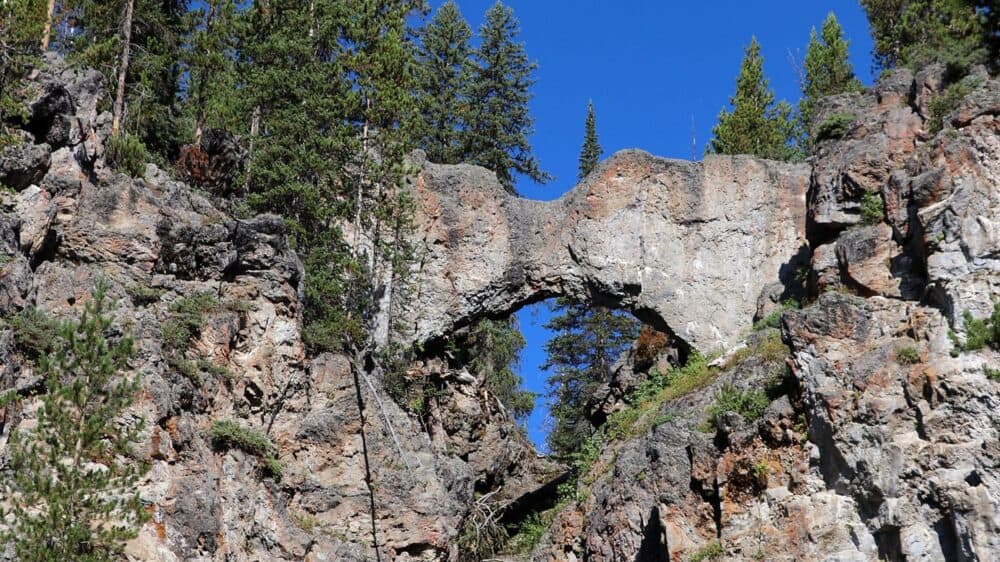
Natural Bridge Trail is a pleasant walk near Bridge Bay and Yellowstone Lake.
The trail follows an old road through the forest to a natural rock arch. It is not the most dramatic hike in the park, but it is quiet, easy, and a nice break from the crowded geyser basins.
This is a good choice if you are staying near Lake Yellowstone, Fishing Bridge, or Bridge Bay. It also works well when you want a low-stress hike that still feels like a real trail.
Check seasonal access before going. Some trails in Yellowstone open later than others due to snow, bear activity, or other conditions.
12. Tower Fall Overlook
Distance: Short walk from the parking area
Area: Tower-Roosevelt
Best for: Quick waterfall view
Trail type: Short viewpoint walk
Difficulty: Easy
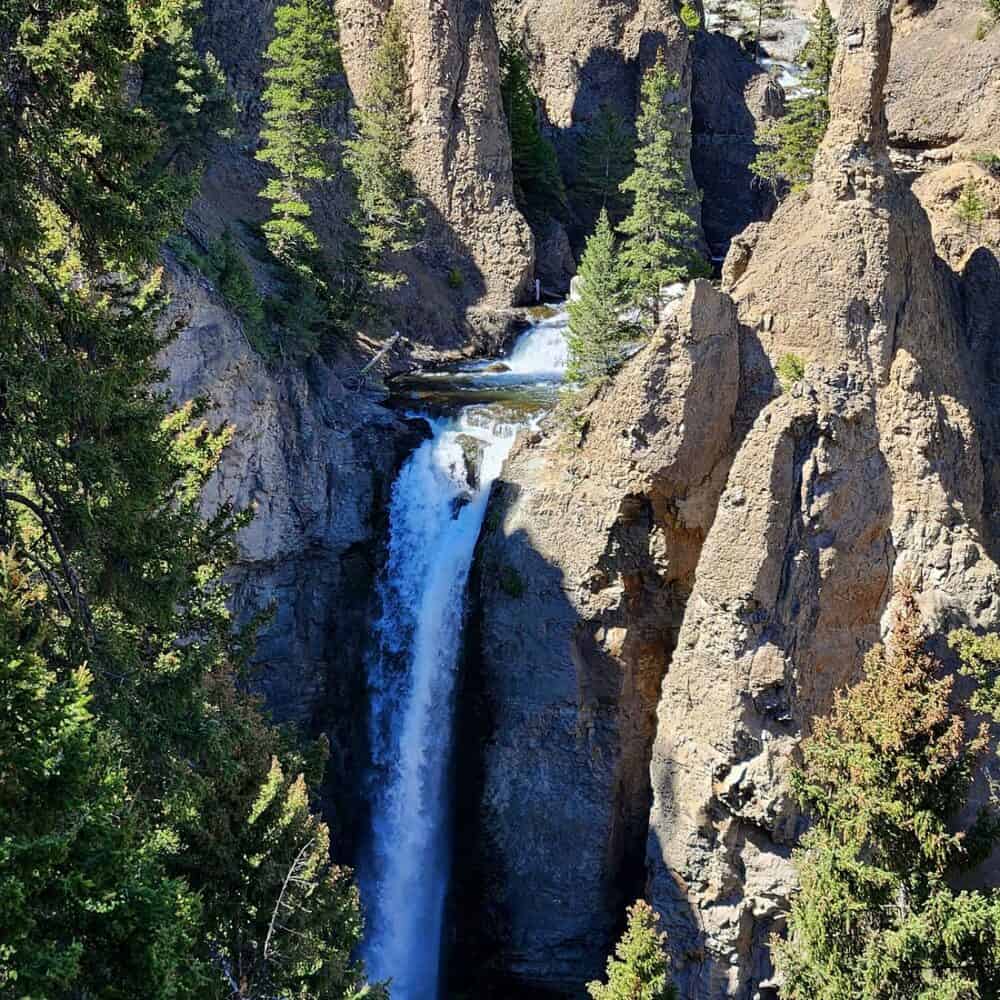
Tower Fall is more of a short scenic stop than a hike, but it deserves a mention.
The viewpoint is close to the parking area and gives you a look at the 132-foot waterfall dropping between volcanic rock pinnacles. It is quick, easy, and worth stopping for if you are in the Tower-Roosevelt area.
The old trail to the base has had closures in past years, so do not assume you can hike down. The overlook is the main attraction for most visitors.
Pair this with Wraith Falls or Lamar Valley for a great day in the northern part of Yellowstone.
Best Easy Yellowstone Hikes for Families
If you are visiting Yellowstone with kids, older family members, or people who do not hike much, start with these:
- West Thumb Geyser Basin
- Fountain Paint Pot
- Upper Geyser Basin near Old Faithful
- Mammoth Hot Springs Lower Terraces
- Mud Volcano
- Wraith Falls
These trails are short, scenic, and easy to fit into a normal sightseeing day. They also give you a big variety without asking too much from tired legs.
For families, I would avoid packing the day too tightly. Yellowstone is huge, and driving times are longer than they look on a map. Add wildlife jams, parking delays, bathroom stops, and snack emergencies, and suddenly your “quick morning loop” becomes a full-blown expedition.
Best Easy Hikes for Wildlife
For wildlife, choose trails and areas near open valleys, lakes, and quieter corners of the park.
Good options include:
- Storm Point Trail
- Trout Lake Trail
- Wraith Falls Trail
- Mud Volcano area
- Lamar Valley roadside stops
- Hayden Valley roadside stops
Do not hike close to wildlife. Yellowstone animals are not props. Bison, elk, bears, and moose all need space.
The park recommends staying at least 100 yards from bears and wolves, and at least 25 yards from other large animals. A camera zoom is cheaper than a hospital visit. Usually.
Best Easy Boardwalk Hikes in Yellowstone
Yellowstone’s boardwalk hikes are some of the best in the national park system. They let you safely explore thermal areas without damaging fragile ground or accidentally stepping into boiling water.
The best easy boardwalk hikes include:
- Upper Geyser Basin
- West Thumb Geyser Basin
- Norris Geyser Basin
- Fountain Paint Pot
- Mud Volcano
- Mammoth Hot Springs Terraces
Boardwalks can still be slippery in rain, snow, or cold weather. Walk carefully and keep kids close. Do not step off the boardwalk for photos. The thermal crust can be thin, and the water below can cause severe burns.
What to Bring on Easy Hikes in Yellowstone
Even easy hikes in Yellowstone deserve basic preparation.
Bring water, snacks, sunscreen, a hat, and layers. Weather can change quickly, especially at higher elevations. A sunny morning can turn into wind, rain, or hail before you have finished your granola bar.
For non-boardwalk trails, carry bear spray and know how to use it. You can buy or rent bear spray in and around the park. Do not bury it in your backpack. Keep it where you can reach it quickly.
Good walking shoes help too. You do not need heavy hiking boots for most of these trails, but flip-flops are a bad idea. Yellowstone has gravel, boardwalks, dirt paths, mud, stairs, and surprise puddles.
Also download offline maps before entering the park. Cell service is limited. The official NPS App is helpful, especially if you download Yellowstone details before your visit.
When Is the Best Time to Hike in Yellowstone?
Summer is the easiest time for hiking because most park roads and trails are open. It is also the busiest time. Expect crowds from June through August, especially around Old Faithful, Grand Prismatic, Norris, and Canyon.
Spring can be beautiful, but some trails may still have snow, mud, or bear closures. Fall is one of the best times to visit if you want fewer crowds and cooler hiking weather. September can be especially nice.
Winter is a totally different experience. Most roads close to regular vehicles, and access becomes limited. Always check the park’s current conditions before planning hikes outside the main summer season.
For the best daily experience, hike early or later in the afternoon. Midday can be hot, crowded, and parking can get frustrating. Grand Prismatic is one exception because the colors often show better when the air warms up and the steam thins.
Tips for Enjoying Easy Hikes in Yellowstone
Start early when you can. Parking lots fill fast in popular areas. Old Faithful, Midway Geyser Basin, Norris, and Grand Prismatic can get especially busy.
Keep your plans flexible. Yellowstone is not a place where every minute should be scheduled. A bison jam might slow you down. A geyser might be about to erupt. A random viewpoint might steal 30 minutes of your life in the best way.
Do not underestimate driving distances. Yellowstone is massive. Group hikes by area instead of bouncing all over the park.
Here is a simple way to think about it:
Spend one day around Old Faithful, Grand Prismatic, Fountain Paint Pot, and Norris.
Spend another day around Yellowstone Lake, West Thumb, Storm Point, Natural Bridge, Mud Volcano, and Hayden Valley.
Use a northern day for Mammoth Hot Springs, Wraith Falls, Tower Fall, Trout Lake, and Lamar Valley.
That kind of plan makes the park feel less chaotic.
Final Thoughts on Easy Hikes in Yellowstone
You do not need huge mileage to enjoy Yellowstone.
Some of the park’s best moments happen on short trails and boardwalks. You can watch Old Faithful erupt, see Grand Prismatic from above, walk beside Yellowstone Lake, listen to mud pots bubble, and stand below a waterfall without doing anything too intense.
That is what makes Yellowstone so fun. It gives casual hikers a front-row seat to some of the wildest scenery in the country.
Just bring layers, carry bear spray when needed, stay on the trails, and give wildlife plenty of room.
Yellowstone is easy to enjoy, but it is not a theme park. It is stranger, bigger, smellier, and way more memorable.

World Traveling Blogger, Social Media Expert and Nerd who has a passion for Adventure and Fitness.