
Updated July 2026: This refreshed guide to hiking the Banaue Rice Terraces in the Philippines is based on my original trip to Banaue, Hapao, Batad, and Sagada, with updated planning notes for travelers visiting the Ifugao rice terraces today.
There are some travel places that look impressive in photos, then feel even bigger once you are actually standing there. The Banaue Rice Terraces and the surrounding Ifugao terraces in the northern Philippines were like that for me.
I had seen the classic images before: green stairways carved into mountains, small villages tucked into valleys, clouds hanging low over ridgelines. But hiking through the terraces at Hapao and Batad made the place feel completely different. You are not just looking at a viewpoint. You are walking along narrow stone walls, passing homes and fields, watching people still work land that has been shaped by hand for generations.
This article is a refreshed version of my original Banaue Philippines trip report, but I wanted to make it more useful for anyone planning the trip now. I’ll cover how to get to Banaue, what to expect, the difference between Hapao and Batad, how Sagada fits into the itinerary, what I would pack, and what I would do differently if I went back.
The most important thing to know is this: Banaue is not a polished resort destination. It is rural, mountainous, a little rough around the edges, and logistically tiring at times. But if you like hiking, culture, dramatic landscapes, and places that feel very different from the standard beach-and-city Philippines itinerary, it is absolutely worth the effort.
Planning more active travel? You may also like my guides to riding the Ha Giang Loop in Vietnam, jungle trekking in Thailand, and the best hikes near Seattle.
Affiliate disclosure: This article may contain affiliate links. If you book or buy through these links, Fit Living Lifestyle may earn a commission at no extra cost to you.
Quick Look: Banaue Rice Terraces Hiking Guide
| Experience | Best for | What to know |
|---|---|---|
| Banaue Viewpoints | Classic terrace views, photos, easy first stop | Good introduction, but not the most immersive hike |
| Hapao Rice Terraces | Scenic terrace walking, hot spring, gentler hiking | My favorite for a first terrace hike |
| Batad Rice Terraces | Big views, steep hiking, Tappiya Falls | Harder and more dramatic, guide recommended |
| Sagada | Hanging coffins, caves, cool mountain town | Better as an overnight if you have time |
| Bangaan | Traditional village scenery, UNESCO terrace cluster | Good add-on near Banaue and Batad |
| Overnight bus from Manila | Budget-friendly transport | Long, tiring, but common for travelers |
| Local guide | Navigation, culture, community support | Worth hiring for Batad and more involved hikes |
On mobile, swipe sideways to view the full table.
A Quick Note on the Banaue Rice Terraces
People often use “Banaue Rice Terraces” as a catch-all phrase for the terrace landscapes in this part of Ifugao, but it is worth understanding the distinction. The UNESCO World Heritage-listed Rice Terraces of the Philippine Cordilleras include five terrace clusters: Nagacadan, Hungduan, Mayoyao, Bangaan, and Batad. Batad and Bangaan are in the municipality of Banaue, while the famous roadside Banaue viewpoints are not the same as the UNESCO-inscribed clusters.
That does not make the Banaue viewpoints unworthy. They are still beautiful and easy to visit. But if you are traveling this far, I would not stop at a viewpoint and call it done. The real magic is getting into the valleys, walking the terrace paths, and seeing how the landscape, culture, farming, and villages all connect.
The terraces are also not ruins. They are a living cultural landscape shaped and maintained by the Ifugao people. When you visit, go with respect, hire local guides when appropriate, pay local fees without complaining, and remember that you are walking through working agricultural land, not a theme park built for travelers.
Where Is Banaue?
Banaue is in Ifugao Province in the Cordillera region of northern Luzon, Philippines. It is often visited as an overnight bus trip from Manila, although you can also work it into a longer northern Luzon route with Baguio, Sagada, Bontoc, or other mountain towns.
The journey is part of the adventure, but it is not exactly easy. Expect mountain roads, long travel times, early arrivals, and some level of sleep deprivation if you take the overnight bus. This is not the part of the Philippines where you casually pop over for a quick morning excursion from Manila.

How to Get to Banaue from Manila
The simplest independent route is still the overnight bus from Manila to Banaue. Coda Lines currently lists a Manila to Banaue departure in the evening, and Ohayami Trans also serves Banaue and nearby Cordillera routes. Schedules can change, so check directly with the bus operator before building your itinerary around a specific departure time.
When we went, we arrived very early in the morning after the overnight ride. That part has not really changed as a concept. You get off the bus tired, slightly disoriented, and suddenly everyone wants to help you arrange lodging, tours, or transport. Some of that help is useful. Some of it can feel a little pressured.
My advice is to pause before saying yes to the first offer. Get your bearings, ask about the current local tourism process, compare a couple of guide or transport options, and see whether other travelers want to split the cost of a jeepney or van. That is exactly how we made our first day work better.
How Many Days Do You Need in Banaue?
Two nights is enough to see a good amount if you are okay moving quickly. That is what we did. It gave us time for Hapao, Sagada, and Batad, although it was definitely a full schedule.
Three nights would be better for most travelers. You could arrive, rest, do Hapao, spend a full day in Batad, and either add Sagada or another terrace village without feeling like you are constantly chasing transport.
Four or more nights makes sense if you want slower hiking, photography, village stays, or time to go beyond the standard Banaue-Batad-Hapao route.
Our 2-Night Banaue Itinerary
Here is the basic itinerary we followed on our original trip. It was tiring, but it worked.
- Day 1: Arrived in Banaue early after the overnight bus from Manila, checked into a simple hotel, booked a shared trip to Hapao Rice Terraces, hiked the terraces, visited the hot spring, returned for dinner in town, and crashed early.
- Day 2: Took a group van to Sagada for a day trip, visited the hanging coffins, explored the town, ate at Yogurt House, and returned to Banaue by late afternoon or early evening.
- Day 3: Checked out, stored luggage, took a tour to Batad Rice Terraces and Tappiya Falls, returned to Banaue, then waited for the overnight bus back to Manila.
Would I do it exactly this way again? Maybe, if I had limited time. But honestly, adding one extra night would make the whole trip feel much less rushed. The hikes are not just about checking off viewpoints. They are better when you have time to slow down.
Hapao Rice Terraces: The Best First Hike Near Banaue
Hapao was the first terrace area we explored, and I still think it is a great choice for a first hike near Banaue. We picked it for a few reasons: it was fairly close to town, we were tired from the overnight bus, and we had heard the terrain was not as punishing as Batad.
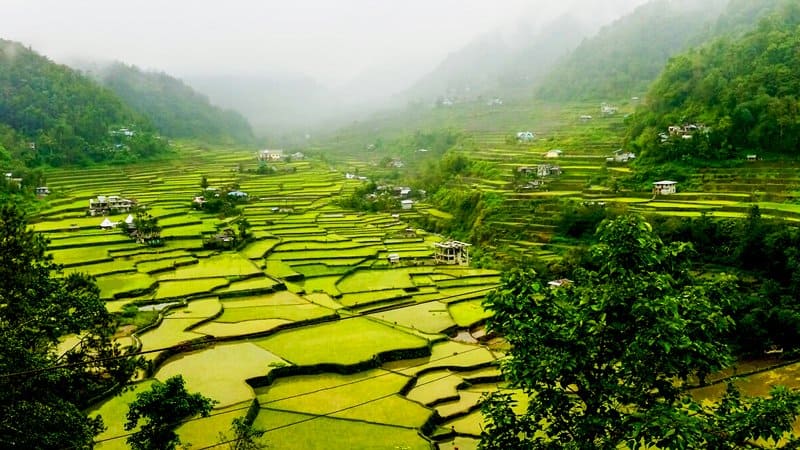
That turned out to be the right call. Hapao felt wide, open, and peaceful. The terraces here are not as steep and amphitheater-like as Batad, but they stretch beautifully through the valley and make for a more relaxed introduction to walking on terrace walls.

With a guide, we slowly descended into the terraces, moved from wall to wall, passed homes and fields, and eventually made our way toward the hot spring. This is where good footwear matters. The paths can be narrow, wet, uneven, and easy to misjudge if you are distracted by the view or trying to take photos while walking.
The hot spring at the end was the perfect reward. After a couple of hours of walking, taking photos, and trying not to lose my balance on the terrace edges, sitting in warm water felt ridiculously good. Bring swimwear or quick-dry shorts if you plan to do this hike. This is one of those small packing decisions that can make the day way better.

- Best for: First terrace hike, scenery, hot spring, less intense terrain
- Difficulty: Moderate, mostly because of uneven paths and narrow terrace walls
- Guide: Recommended, especially if you want local context and easier navigation
- Bring: Hiking shoes, water, sun protection, swimwear, towel, and small cash
Batad Rice Terraces and Tappiya Falls
If Hapao felt like a beautiful introduction, Batad felt like the dramatic version. The Philippines Department of Tourism describes the Batad Rice Terraces as part of the UNESCO World Heritage landscape and notes their amphitheater-like formation. That is exactly what makes them so memorable.

Batad is steeper, more contained, and more physically demanding than Hapao. You descend into the village and terraces, cross the slopes, climb to viewpoints, then keep going toward Tappiya Falls if that is part of your route. The waterfall is beautiful, but getting there is not effortless. You will climb down, which means you will also climb back up.
We stopped at a small restaurant on the way down and were told we could pre-order food for the return. That was a very good idea. You burn more energy than you expect on this hike, especially in the heat or humidity, and the return climb can feel much longer than the descent.
The terraces themselves are stunning. The village sits in the base of the valley, and the rice fields curve around it like a giant green amphitheater. It is one of those views that makes you understand why people make the long journey north.
I would definitely recommend a local guide for Batad. The paths are not always obvious, the terrace walls can feel maze-like, and a guide helps you understand what you are looking at instead of treating the place like a pretty backdrop.
- Best for: Dramatic terrace views, tougher hiking, waterfall add-on, photography
- Difficulty: Moderate to hard, depending on heat, fitness, and whether you hike to Tappiya Falls
- Guide: Strongly recommended
- Bring: Plenty of water, snacks, cash, good shoes, and dry clothes if swimming at the falls
Hapao vs Batad: Which Rice Terrace Hike Should You Choose?
If you only have time for one hike, the choice depends on what kind of experience you want.
| Choose Hapao if… | Choose Batad if… |
|---|---|
| You want a gentler first terrace hike | You want the most dramatic amphitheater view |
| You like wider valley scenery | You want a more physical hiking day |
| You want to end at a hot spring | You want to add Tappiya Falls |
| You are tired after the overnight bus | You have better energy and more time |
| You want something beautiful but less intense | You want the classic bucket-list terrace hike |
If I were doing the trip again, I would still try to do both. Hapao gave us a more relaxed, local-feeling day. Batad gave us the iconic, physically demanding, “wow, this place is unreal” experience.
A Side Trip to Sagada
Sagada is a mountain town in Mountain Province, and it makes a great side trip if you have extra time. It is known for the hanging coffins, cave systems, cool air, pine forests, and a very different highland feel from Banaue.
We visited Sagada as a day trip from Banaue. It worked, but I would probably stay overnight if I went back. The drive is long enough that doing it there and back in one day can make the visit feel rushed.

We chose to see the hanging coffins, which involved a fairly easy but beautiful hike with a local guide. The guide explained the burial traditions and gave the place far more meaning than if we had just wandered in, taken photos, and left. This is one of those experiences where respect matters. These are cultural and burial sites, not props.
If you have more time, Sagada also has caves, waterfalls, viewpoints, and guided outdoor activities. After our hike, we ate at the Yogurt House, sat on the balcony, and finished with local lemon pie. That is still one of the travel-food memories that sticks with me from the trip.
- Best for: Hanging coffins, caves, mountain town atmosphere, cooler weather
- Time needed: Possible as a day trip, better as an overnight
- Guide note: Use the local tourism office and follow guide requirements for cultural and cave sites
What to Expect in Banaue
Banaue is not luxury travel. At least, it was not for us. Accommodation was simple, electricity was limited in places, and charging devices could be a whole minor mission. At our hotel, the only outlet available to guests was in the dining room, and some places charged a fee to power up electronics.
There was also a very early-night rhythm. Our hotel locked the doors around 9pm and lights were out around 10pm. After hiking and riding around mountain roads all day, that was honestly fine. This is not the place I would go expecting nightlife.
The bigger thing to expect is that tourism here is local and practical. You may arrange transport through your accommodation, the tourism office, or drivers in town. Prices can vary. Grouping up with other travelers can help reduce costs. Bring cash, be patient, and build in buffer time.
Where to Stay in Banaue and Batad
Most travelers use Banaue town as a base because it has more transport options, restaurants, and guesthouses. Batad is better if you want to wake up right near the amphitheater terraces, but it is more remote and basic. Some travelers also stay in Sagada if they are combining several Cordillera destinations.
Before booking, read recent reviews carefully. In this part of the Philippines, comfort levels can vary a lot. I would pay more attention to comments about cleanliness, hot water, power, transport help, and whether the host can connect you with guides than to whether a place feels “stylish.”
- Banaue town: Best for convenience, transport, restaurants, and arranging day trips.
- Batad: Best for terrace views, village atmosphere, and hikers who do not mind simpler stays.
- Sagada: Best if you want caves, hanging coffins, mountain air, and a separate overnight side trip.
Best Time to Visit the Banaue Rice Terraces
The terraces change throughout the year, so the “best” time depends on what you want to see. Planting and growth periods can be lush and green. Harvest periods can bring golden tones. Dry season generally makes hiking and transport easier, while rainy season can make trails slippery and roads more unpredictable.
As a rough planning rule, many travelers aim for the drier months from December to May, then check more specific timing for Batad, Hapao, or other villages based on planting and harvest cycles. Conditions vary by terrace cluster, so recent local advice is more useful than trying to time the entire trip from an old blog post.
What to Pack for Hiking the Banaue Rice Terraces
- Comfortable hiking shoes or trail runners with good grip
- Small daypack
- Reusable water bottle
- Snacks or trail food
- Light rain jacket
- Sun hat, sunglasses, and sunscreen
- Swimwear and small towel for Hapao hot spring or Tappiya Falls
- Portable power bank
- Cash in small bills
- Offline maps or saved accommodation details
- Toilet paper or tissues
- A sense of patience for slow travel logistics
I would also bring a camera you actually enjoy using. Phone photos are fine, but the scale of the terraces is hard to capture, and you will probably take more photos than you expect.
Do You Need a Guide?
For simple viewpoints, no. For more involved hikes, especially Batad and routes across terrace walls or down to Tappiya Falls, I would hire a guide. It supports the local community, reduces the chance of getting turned around, and gives you context you will not get from just following a path.
A guide also helps with the most underrated part of hiking here: knowing which terrace paths are appropriate to walk on. These are working fields. It is very easy to behave badly without meaning to if you treat every visible path as public trail.
Responsible Travel Tips for Banaue, Batad, Hapao, and Sagada
- Pay local fees and guide fees respectfully.
- Stay on appropriate paths and avoid stepping into planted terraces.
- Ask before photographing people, homes, or private spaces.
- Carry out your trash.
- Dress and behave respectfully at cultural and burial sites.
- Use local guides and local businesses when possible.
- Do not fly drones unless you have confirmed current local rules and permissions.
Is Hiking Banaue Rice Terraces Worth It?
Yes, absolutely. But I would not describe it as effortless. The overnight buses are tiring, the mountain roads can be slow, accommodations can be basic, and the hikes require real attention. This is not the easy tropical island version of travel in the Philippines.
But that is also why it stays with you. Hiking through Hapao, standing above Batad, cooling off at a waterfall, soaking at the hot spring, and listening to a Sagada guide explain the hanging coffins gave the trip a depth I would not have gotten from staying on the main tourist trail.
If you are the type of traveler who likes a little discomfort in exchange for a more memorable story, Banaue belongs on your Philippines itinerary.
Banaue Rice Terraces FAQ
Are the Banaue Rice Terraces a UNESCO World Heritage Site?
The broader Rice Terraces of the Philippine Cordilleras are a UNESCO World Heritage Site. The inscribed clusters include Batad and Bangaan in Banaue, along with Nagacadan, Hungduan, and Mayoyao. The famous Banaue roadside viewpoints are often discussed with the UNESCO terraces, but the official listing is more specific.
How hard is the Batad Rice Terraces hike?
The Batad hike is moderate to hard for most casual travelers, especially if you continue to Tappiya Falls. Expect steep sections, uneven paths, stairs, narrow terrace edges, heat, and a tiring climb back out.
Is Hapao easier than Batad?
Yes, Hapao generally feels easier and more relaxed than Batad. The valley is wider, the hike can feel less steep, and the hot spring makes it a great first terrace experience near Banaue.
Can you visit Banaue without a tour?
You can travel to Banaue independently and arrange guides or transport locally. For hikes through the terraces, I recommend using local guides, especially in Batad, Hapao, and culturally sensitive areas.
How long is the bus from Manila to Banaue?
Expect roughly an overnight journey, commonly around 9 to 10 hours depending on operator, traffic, road conditions, stops, and schedule. Always check current bus times directly before booking because routes and departures can change.
Should I stay in Banaue or Batad?
Stay in Banaue if you want easier transport, more lodging options, and a convenient base for day trips. Stay in Batad if you want a more immersive terrace experience and do not mind simpler accommodation and more limited services.
Is Sagada worth adding to a Banaue trip?
Yes, Sagada is worth adding if you have time. I did it as a day trip, but I think it is better as an overnight because the mountain travel time makes a same-day visit feel rushed.
Final Thoughts on Hiking Banaue Rice Terraces
Hiking the rice terraces around Banaue was one of the most memorable parts of my Philippines trip. Hapao gave us a wide, peaceful, scenic hike with a hot spring at the end. Batad gave us the dramatic amphitheater view and the kind of climb that makes dinner taste better. Sagada added culture, mountain air, and a completely different feel from the terrace valleys.
This is a trip that asks a little more from you. The buses are long. The roads are winding. The accommodation may be simple. The hikes can be slippery, steep, and sweaty. But the reward is a landscape that does not feel like anywhere else I have been.
If you are heading to the Philippines and want an adventure that goes beyond beaches, Banaue, Hapao, Batad, and Sagada are well worth working into your itinerary.
Read next: Ha Giang Loop Vietnam • Jungle Trekking in Thailand • Best Hikes Near Seattle

World Traveling Blogger, Social Media Expert and Nerd who has a passion for Adventure and Fitness.
Ahhh, that is too bad. It is such a unique area and experience. I am sure you will be back there to check it off your list in the future! Thanks for reading the article and commenting!
Beautiful!
A friend and I really wanted to visit here when we were in the Philippines years ago but everywhere we asked about it, they looked at us blankly and couldn’t tell us how to get there. When we finally found someone who told us about the bus to catch, we didn’t have enough time left. It was only a quick trip. So it is still on the bucket list.